QR Code vs Barcode Employee ID Badges: Which Is More Secure?
 Monday, August 31, 2026
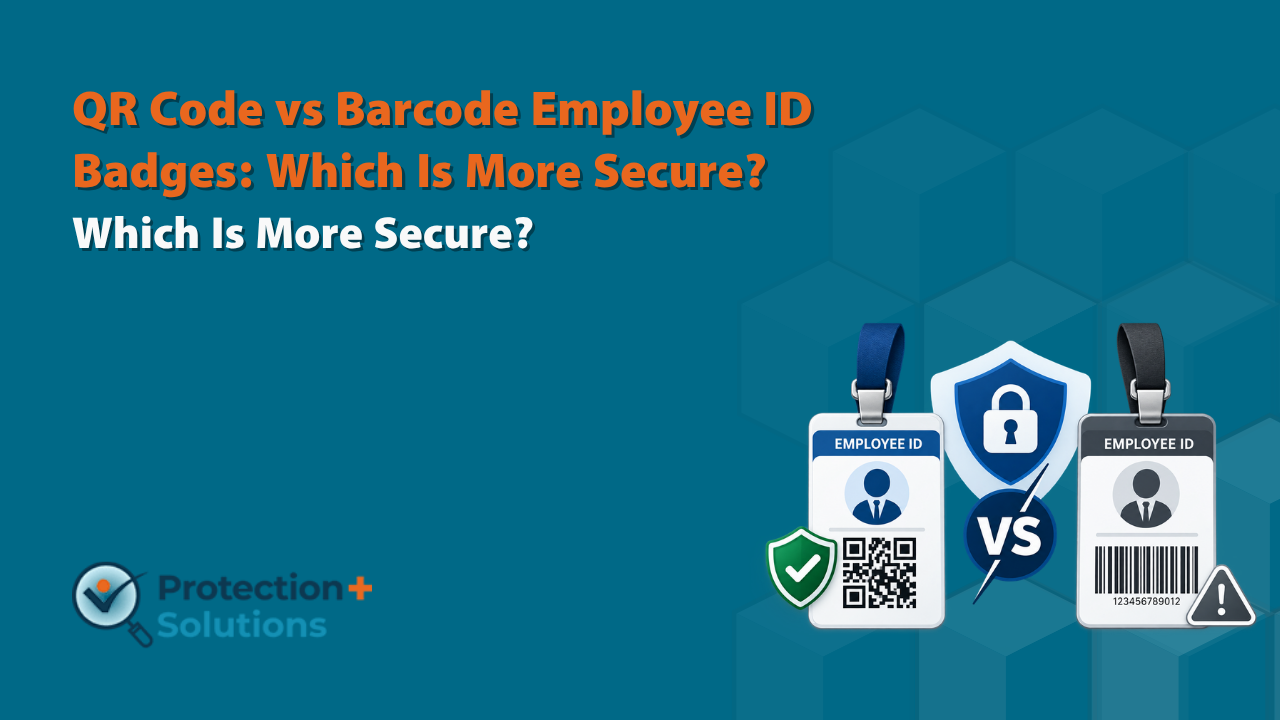
When a customer opens their door to a technician, caregiver, or delivery driver, the badge on that person’s chest is often the only proof of vetting they’ll ever see. So it’s a fair question: QR Code vs Barcode Employee ID Badges which is more secure way to identify a screened employee?
The short answer the symbol on the badge matters far less than what’s behind it. A QR code and a barcode are just containers for data. Security comes from how that data is verified, how often it’s updated, and what happens the moment an employee fails a background check. Below, we break down the real differences so you can make an informed decision for your company, franchise, or vendor network.
QR Code vs Barcode: Quick Comparison
| Aspect | QR Code | Barcode (1D) |
| Data capacity | Stores significantly more data (URLs, IDs, encrypted fields) | Stores limited numeric/alphanumeric strings only |
| Scan method | Any smartphone camera can scan it | Requires a dedicated laser or camera scanner in most cases |
| Customer self-verification | Easy — homeowner scans with their own phone | Difficult — most consumers don’t own barcode scanners |
| Damage tolerance | Can still scan with up to ~30% of the code obscured or damaged | Fails to scan if a single bar is smudged or torn |
| Real-time status link | Can link directly to a live verification page | Usually linked to a static database lookup, not a live page |
| Counterfeiting difficulty | Harder to reproduce convincingly without the source system | Easier to reproduce with basic printing equipment |
| Best fit for | Consumer-facing verification (in-home services, badges checked by the public) | Internal-only tracking (warehouse, inventory, employee time clocks) |
Why the Symbol Isn’t the Real Security Feature
Both QR codes and barcodes are, on their own, just pointers. A QR code that links to nothing more than an employee’s name and hire date offers no more protection than a barcode with the same information. The real question a business owner should be asking is:
“When someone scans this badge, does it show whether this person is safe to let into a home or business right now — not six months ago?”
This is where most badge systems, regardless of symbol type, fall short. A badge printed after a single annual background check tells a customer nothing about what’s happened in the eleven months since. If an employee is arrested for a disqualifying offense two weeks after being badged, a static QR code or barcode will still display “cleared” until the next renewal cycle — because the badge itself never changes, and neither does the printed code.
What Actually Makes an ID Badge Secure
- Live status, not printed status. The code on the badge should pull from a database that updates continuously, not from information baked in at print time.
- Ongoing monitoring, not annual snapshots. A background check performed once a year has an eleven-month blind spot. Continuous or monthly re-screening closes that gap.
- Public verifiability. Customers should be able to check a badge’s status themselves — by scanning it, entering a serial number online, or calling a verification line — without relying on the employee’s word.
- Immediate deactivation. If an employee fails a re-check, the badge’s status should flip to failed instantly across every verification channel, not just internally.
- Tamper resistance. The badge itself (photo, lamination, serial number) should be difficult to alter or duplicate, regardless of which code type is printed on it.
A QR code makes points 3 and 4 easier to deliver, since any smartphone can scan it and pull a live result. That’s a genuine advantage over traditional barcodes, which usually require dedicated hardware most customers don’t have sitting in a kitchen drawer. But a QR code without live backend monitoring is still just a static symbol — it’s the system behind it that determines whether “secure” actually means anything.
How This Works With Continuous Monitoring
This is the gap Protection Plus Solutions built its badging system to close. Every ID badge we issue is tied to an employee’s background screening record, and with our CrimSPY feature, that record is automatically re-checked every month at no additional cost — not once a year.
If criminal activity turns up during a monthly re-check:
- The badge’s clearance status is immediately canceled
- A FAILED symbol appears on the badge’s status page on our verification website
- Your local franchise and corporate headquarters are notified right away
Customers can verify any badge in real time through our BadgeLINK™ system — either by scanning the code on the badge, entering its serial number on our website, or calling our verification line during business hours. That means the badge isn’t just a printed credential; it’s a live link to that employee’s current, up-to-date screening status.
View the PASS/FAIL Badging Process →
Which Should Your Company Use?
For internal purposes only — tracking inventory, clocking employees in and out, managing warehouse stock — a traditional barcode is often perfectly adequate and cheaper to implement.
But for customer-facing ID badges, especially in industries where employees enter homes or businesses unsupervised (maid services, caregivers, handymen, carpet cleaning, door-to-door sales, delivery), a QR code tied to a live verification system is the stronger choice. It lets the person on the other side of the door do their own due diligence in seconds, using a device they already have in their pocket.
FAQ
Is a QR code harder to fake than a barcode?
Not inherently both can be copied with basic tools if there’s nothing behind them. What makes either one hard to fake is linking it to a live, monitored database rather than static printed data.
Can customers verify a QR code badge without an app?
Yes. Most smartphone cameras can scan a QR code without a separate app. Badges using PPS’s BadgeLINK™ system can also be verified by entering the badge’s serial number directly on our website.
How often is an employee’s background rechecked with a QR-linked badge?
With PPS’s CrimSPY feature, badge-linked background checks are re-run automatically every month, compared to the once-a-year screening most companies rely on.
What happens to the badge if an employee fails a monthly recheck?
The badge’s clearance is canceled immediately, a FAILED status is posted on our verification site, and both the local franchise and corporate office are notified without delay.
Do QR code badges cost more than barcode badges to print?
Printing costs are comparable. The meaningful cost difference comes from the verification system behind the code, not the code type itself.


